TMJ Botox NYC
Most TMJ Symptoms Come From Overactive Jaw Muscles
If you’re dealing with jaw pain, clenching, or grinding, you’re not alone. Most TMJ symptoms I see are driven by overactive jaw muscles — especially the masseter muscles.
At Skinly Aesthetics in Manhattan, Dr. Schwarzburg uses Botox to reduce that excessive muscle activity and relieve tension without affecting normal function. The goal is simple: less clenching, less pain, better day-to-day comfort.For patients who also notice a wider or heavier lower face, this overlaps with masseter Botox for jaw slimming, since both target the same muscle.
GET 20% OFF YOUR FIRST TREATMENT AT SKINLY AESTHETITCS



Quick Facts: TMJ Botox
- Treatment Type: Botox injection
- Best For: Jaw pain, clenching, bruxism
- Treatment Time: 10–20 minutes
- Downtime: Minimal
- Results Timeline: 3–7 days onset, full effect 2–4 weeks
- Duration: 3–6 months
- Performed By: Dr. Schwarzburg, known for precision-based injection techniques and over 10 years of experience
- Location: Upper East Side, NYC
What Is Botox for TMJ?
Botox for TMJ relaxes overactive jaw muscles — primarily the masseter muscle – which are responsible for clenching and grinding.
Reducing that activity helps:
- relieve jaw tension
- decrease pain and pressure
- limit grinding
- improve function
Because this is the same muscle used in masseter Botox, some patients also notice gradual jaw slimming
What Causes TMJ and Clenching?
Most cases are driven by:
- chronic clenching (often stress-related)
- nighttime grinding (bruxism)
- muscle overuse
- bite imbalance
Over time, the masseter muscles become overactive and enlarged, which leads to both pain and a heavier lower face.
What Symptoms Can TMJ Botox Help With?
Botox for TMJ may improve:
- jaw pain and tightness
- teeth grinding and clenching
- tension headaches
- facial fatigue
In the right patient, it can also soften a square or bulky jawline.
TMJ Botox vs Masseter Botox
They target the same muscle, but the intent is different:
- TMJ Botox = functional relief (pain, clenching)
- Masseter Botox = aesthetic change (jaw slimming)
In many patients, both goals are addressed together — but treatment should be planned, not assumed.
Who Is a Candidate?
You’re a good candidate if you:
- clench or grind your teeth
- wake up with jaw tension or headaches
- feel tightness throughout the day
- want a non-surgical solution
More complex joint issues may require additional evaluation.
Why Dr. Schwarzburg
TMJ Botox is not just about injecting a muscle.
Dose, placement, and restraint matter. Over-treating can create imbalance; under-treating does nothing. The goal is controlled reduction — enough to relieve symptoms while preserving normal function. That’s why experience and technique are critical.
What Happens During Treatment
- Consultation: Evaluate symptoms and muscle activity
- Mapping: Identify injection points
- Injection: Botox is placed into the masseter muscles.
- Time: 10–20 minutes
Patients return to normal activity immediately.
Recovery and Downtime
Downtime is minimal.
Most patients resume normal activity the same day. You may notice mild soreness when chewing, slight swelling, or occasional bruising — all resolving within a few days.
Normal function is preserved. The goal is to reduce clenching, not interfere with chewing or speech.
When Will I Feel Relief?
Initial improvement starts in 3–7 days, with full effect in 2–4 weeks.
The change is gradual but noticeable — less tension, less pressure, fewer symptoms.
How Long Does It Last?
Typically 3–6 months.
With consistent treatment, some patients notice reduced clenching patterns over time.
Can It Be Combined with Other Treatments?
Yes — and often should be.
TMJ Botox reduces muscle activity, but not structure. Depending on the patient, it may be combined with:
- Masseter Botox for additional slimming
- DAO Botox to reduce downward pull
- Jawline filler or chin filler for balance
Better results usually come from planning, not a single treatment.
Cost of TMJ Botox in NYC
Botox is priced per unit, with most treatments ranging from $500–$1,200.
The total depends on muscle strength and how much reduction is needed. Dosing is adjusted to relieve clenching while preserving normal function.
TMJ Botox Before and After Results
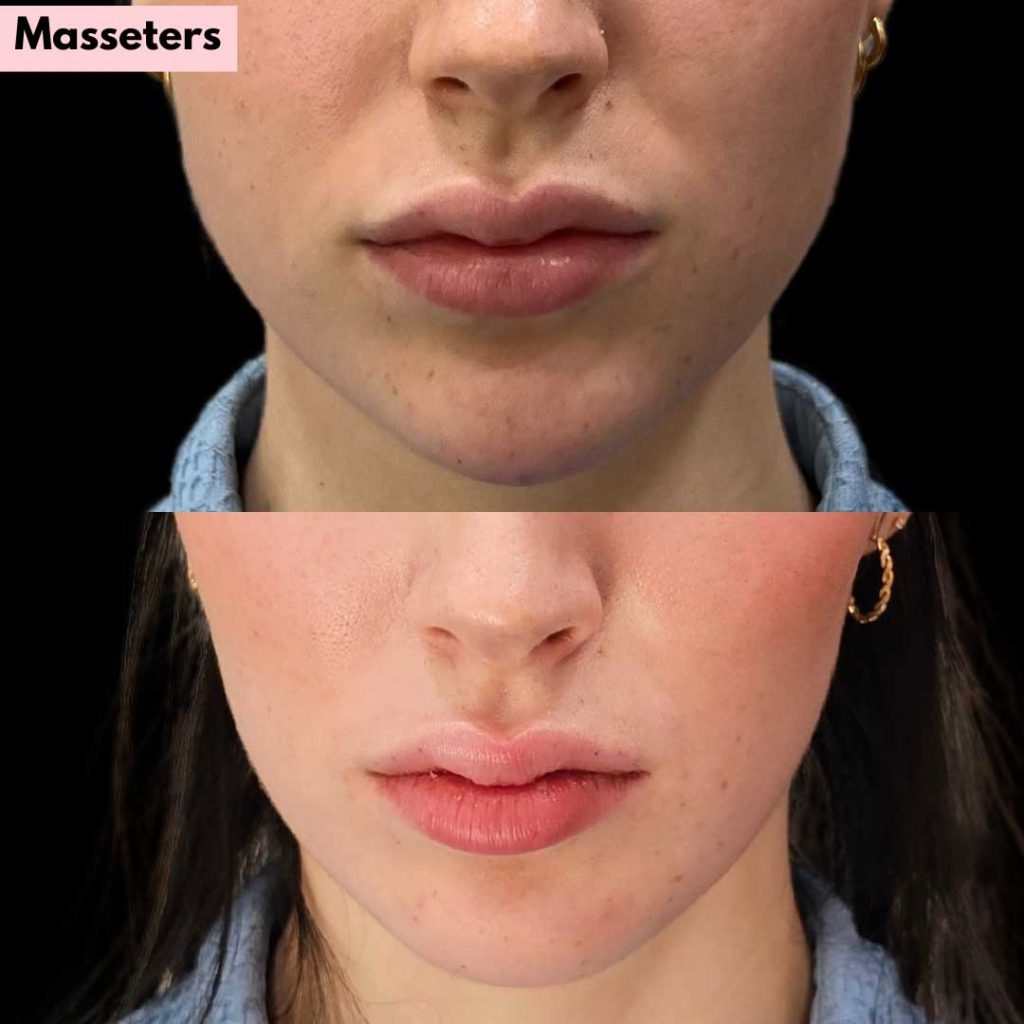
Patients often notice significant improvements after Botox for TMJ at Skinly Aesthetics. Before treatment, common issues include jaw pain, teeth grinding, and a square jawline due to overactive masseter muscles. After treatment, there’s typically a reduction in pain, softer facial contours, and a slimmer jawline, with results visible within 2-4 weeks.
Frequently Asked Questions
Yes. Botox reduces excessive sweating by blocking the nerve signals that activate sweat glands in the treated area.
Botox is FDA-approved for severe underarm sweating. Other areas, such as palms and feet, are commonly treated off-label by experienced providers.
Patients experience approximately 80–90% reduction in sweating, especially in the underarms.
Results typically last 4–6 months, depending on the treatment area, metabolism, and dose used.
Most patients begin noticing improvement within 3–7 days, with full results developing around 2 weeks after treatment.
Dr. Schwarzburg applies a strong numbing cream to keep the treatment painless.
Underarms commonly require approximately 50-70 units per side, while palms and feet may require more customized dosing.
Downtime is minimal. Mild redness, swelling, tenderness, or bruising may occur temporarily at injection sites.
It is best to avoid intense exercise, saunas, and excessive sweating for 48 hours following the treatment.
Other hyperhidrosis treatments include prescription antiperspirants, glycopyrrolate wipes, oral medications, iontophoresis, or miraDry for underarm sweating. Botox is often preferred because it is fast, targeted, and non-surgical.
Ready to Relieve TMJ Pain with Expert Care?
Schedule Your Consultation
If you’re dealing with TMJ symptoms, Botox can be an effective way to reduce clenching and relieve jaw tension.
At Skinly Aesthetics, Dr. Schwarzburg evaluates your muscle activity and symptoms to determine the right dosing — not a standard protocol — so you get relief without compromising normal function.
Take the first step towards a pain-free and confident life. Book your personalized consultation with Dr. Schwarzburg, text us at (212) 774-4264, or email info@skinlyaesthetics.com today!
Client Testimonials
Trustindex verifies that the original source of the review is Google. From consultation to follow-up care, Skinly Aesthetics provided an exceptional experience. The team communicated clearly, answered all my questions, and ensured I felt comfortable throughout the process. Their attention to detail and commitment to achieving the best possible outcome were evident at every stage. I am thrilled with the results and look forward to future visits.Posted on GoogleTrustindex verifies that the original source of the review is Google. Highly recommend this medical spa for anyone considering fillers or aesthetic treatments. The team made me feel comfortable throughout the process, and the results were subtle, refreshed, and beautiful.Posted on GoogleTrustindex verifies that the original source of the review is Google. Wonderful experience at this medical spa. The staff was professional, knowledgeable, and my Botox treatment delivered natural looking results that exceeded my expectations.Posted on GoogleTrustindex verifies that the original source of the review is Google. Did CO₂ laser for acne scars and skin texture. Recovery definitely takes a few days, but wow was it worth it. My skin looks smoother, tighter, and healthier overall. Even old scars softened a lot. The team checked in during healing too, which I appreciated.Posted on GoogleTrustindex verifies that the original source of the review is Google. Everything went amazing! The doctor is very knowledgeable and patient. He explains everything and does an amazing job while keeping everything natural. 1000% recommend him.Posted on GoogleTrustindex verifies that the original source of the review is Google. Skinly is th best spot in the city!!! Friendly staff, clean establishment, they don’t try to over-sell you. I’ve been to several places and Skinly is hands down the best. The results are amazing and so even, + last longer than anywhere else. You won’t regret going here!!!Posted on GoogleTrustindex verifies that the original source of the review is Google. Skinly Aesthetics is a great experience from start to finish. Dr. Schwarzburg is exceptional -- knowledgeable, professional and clearly very experienced. He took the time to explain everything, answered all of my questions and made me feel comfortable and confident throughout the process. The results were excellent, and I'm very happy with how everything turned out. The office has a fun, welcoming vibe, and the staff is incredibly friendly. Highly recommend.Posted on GoogleTrustindex verifies that the original source of the review is Google. I had such a great experience with Dr. Schwarzburg for my CO2 laser treatment. From the consultation to the procedure itself, he was knowledgeable, professional, and made me feel very comfortable the entire process. My treatments went smoothly, and I’m already so happy with my results. I highly recommend Dr. Schwarzburg to anyone considering CO2 laser treatment or other cosmetic procedures!Posted on Google